



























face/body/skin Treatment
Cyst Removal
Cysts are common skin lesions that typically appear as lumps beneath the skin. While many are benign, they can become uncomfortable, inflamed or inconvenient depending on their size and location. At Perfect Skin Solutions, our doctors can assess suitable skin cysts and discuss the most appropriate treatment or removal options for you.
Cysts are a common type of skin lesion. They are round lumps under the skin that are usually filled with fluid, which makes them hard to touch. Cysts will not usually go away by themselves, but they are also not dangerous but can be uncomfortable. They can become inconvenient if they catch on clothes or you may accidentally cut them whilst shaving.
What are Cysts?
Cysts are abnormal, fluid-filled sacs that can form in various parts of the body, including the skin, organs, and tissues. These sacs are usually benign (non-cancerous) and can contain fluid, air, or semi-solid material. Cysts often develop due to blockages in the skin’s oil glands or hair follicles, leading to the accumulation of dead skin cells and other debris. In some cases, infections, injuries, or genetic predispositions can also cause cysts to form. Understanding the nature of cysts is the first step in addressing them effectively.
Types of Cysts
Several types of cyst can develop within or beneath the skin. Common examples include epidermoid cysts and pilar cysts, which may appear as rounded lumps beneath the skin and can sometimes become inflamed or uncomfortable.
Not every lump is a cyst, so appropriate assessment is important before treatment. Our doctors will assess the area and advise whether removal at Perfect Skin Solutions is suitable.
Cyst Removal Methods
There are several methods available for removing cysts, each tailored to the specific type and location of the cyst:
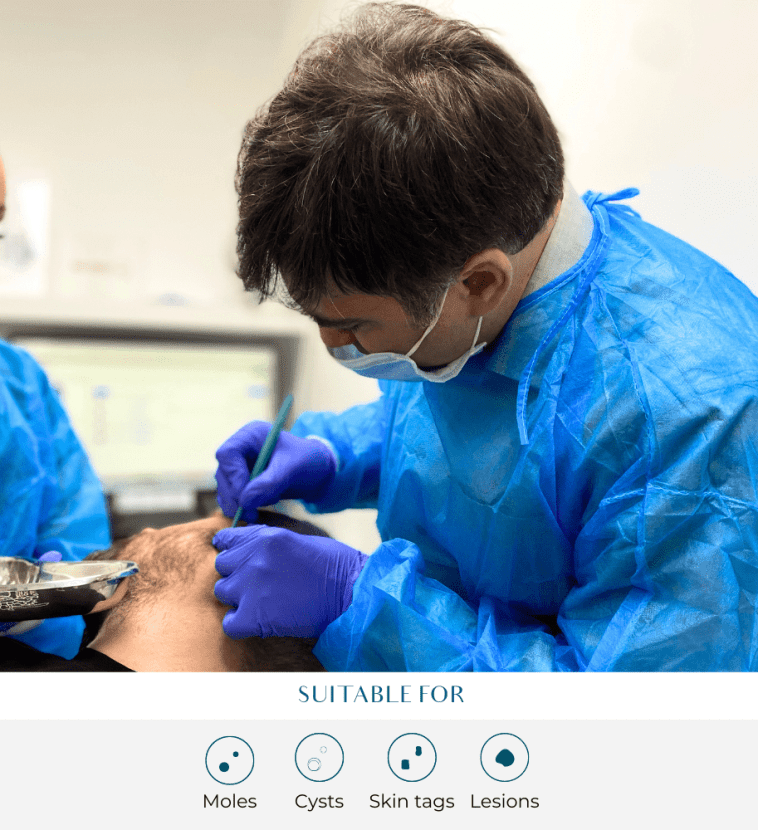
- Surgical procedure: This common method involves making a small incision in the skin to remove the whole cyst. It is often used for larger or more problematic cysts.
- Drainage: This technique involves making a small incision and draining the fluid from the cyst. It is typically used for cysts that are not deeply embedded.
- Fine-needle aspiration: This method uses a thin needle to drain the fluid from the cyst, often used for cysts in sensitive areas.
- Laser cyst removal: This advanced technique uses a laser to create a small hole in the cyst, allowing the fluid to drain out.
- Cortisone injection: This involves injecting cortisone into the cyst to reduce inflammation and shrink it, often used for cysts that are inflamed or painful.
Each method has its advantages, and the choice of treatment will depend on the specific characteristics of the cyst.
For patients looking to have other skin lesions assessed or removed, we also offer Skin Surgery, Mole Removal and Skin Tag & Blemish Removal.
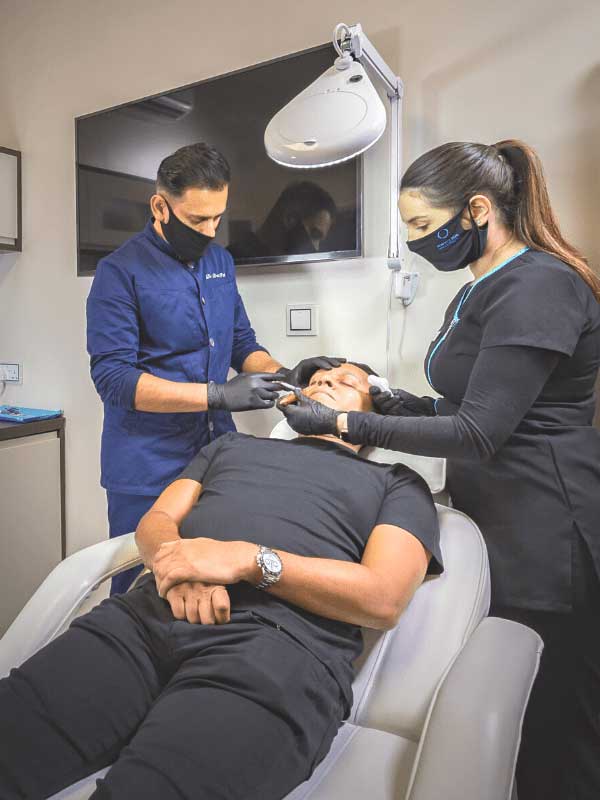

Why choose Perfect Skin Solutions for your Cyst Removal?
Our experienced doctors have performed over 2,000 procedures across private, NHS and military settings. We aim to use the least invasive appropriate approach while prioritising a good cosmetic outcome.
Where clinically required, removed tissue can be sent for private histology laboratory testing. Perfect Skin Solutions is registered with the Care Quality Commission (CQC) to carry out these procedures.
Minor Surgery E-Consult