

























face/body/skin Treatment
Lumps, Bumps & Lesion Removal
Lumps, bumps and skin lesions can develop for many different reasons and may cause discomfort, irritation or cosmetic concern. At Perfect Skin Solutions in Southsea, Portsmouth, our doctors assess suitable skin lesions and discuss the most appropriate treatment or removal options based on their type, size and location.
Understanding Skin Lesions and Lumps
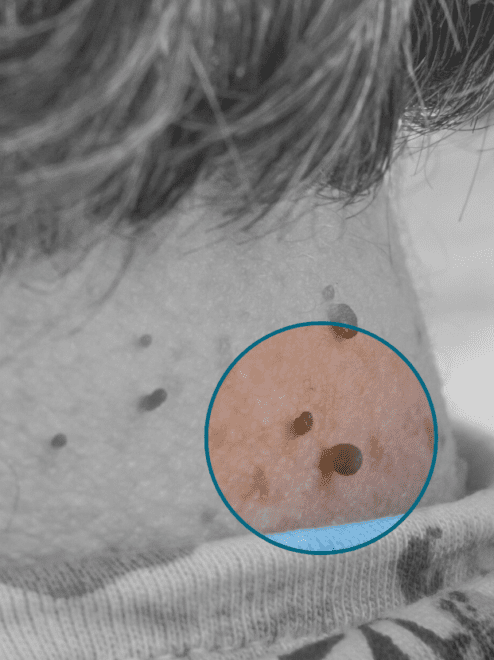
Skin lesions and lumps are growths that appear on or just below the skin. They can be benign (non-cancerous) or cancerous. Benign skin lesions include sebaceous cysts, lipomas, skin tags, and moles. These growths can be completely harmless, but they can also cause discomfort, irritation, or cosmetic concerns. Understanding the type of skin lesion or lump you have is essential in determining the best course of treatment. By identifying whether a skin lesion is benign or potentially harmful, you can make informed decisions about your health and appearance.
Lumps, bumps, skin tags & lesion removal
What is a benign Lesion?
The term benign lesion denotes a range of non-cancerous lumps, bumps and flat pigmented lesions. This includes moles, cysts, keratoses and callouses. Some of these might be irritating you, others may be causing cosmetic impairment or a perceived disfigurement. Removing these lesions involves a small minor operation performed under local anaesthetic (a numbing agent) whilst you remain awake.
What will my treatment involve?
The type of procedure your doctor uses will depend on the anatomical location of the lesion, its size, depth in the skin and whether histology is required. The procedure might involve a complete surgical removal (and histology analysis), a curettage (the lesion is gently pared away), or shave excision. For example, excising an epidermoid cyst involves making an oval incision to allow for better healing and stitching. On initial assessment, your skin will be assessed under an illuminated magnifier (dermatoscope). Any diagnostic uncertainty will warrant a biopsy (taking a small sample) before the procedure to ensure an accurate diagnosis and safe removal.
What is a pre-operative assessment?
This is an opportunity for us to assess your skin and suitability for treatment. We’ll explain the treatment in full and ensure you are prepared. Some complex skin lesions, or those in more difficult areas may need to be referred to secondary care or a plastic surgeon. If we suspect skin cancer or there are concerns about the nature of your skin lesion we may refer you back to the NHS skin cancer pathway or address options for referral to dermatology.
The Removal Procedure
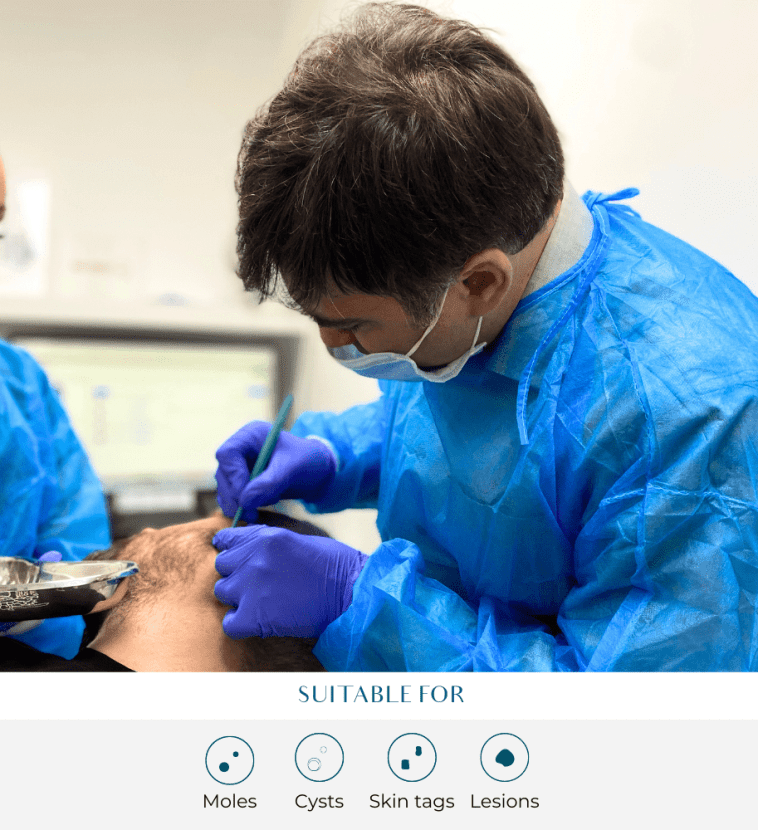
The removal procedure for skin lesions and lumps typically involves a minor surgical procedure performed under local anaesthetic. The type of procedure used depends on the size, location, and type of lesion. We often use Plexr to remove lumps and skin tag.
Minor surgery may be performed on skin growths or a sebaceous cyst.
Aftercare and Recovery
After the removal procedure, patients can usually go home soon after. Over-the-counter pain relief medication can be used to manage any discomfort or pain. It’s essential to keep the incision site clean and dry to prevent infection. Patients may need to return to the clinic a few days after the procedure to inspect the wound and change the dressing. Stitches may need to be removed by a practice nurse or at the Outpatient Department. Patients can usually return to work the day after the procedure, unless their work puts a strain on the area stitched. Proper aftercare ensures a smooth recovery and helps achieve the best possible outcome.
When Should a Skin Lesion Be Assessed?
Many skin lumps and lesions are benign, but any new, changing or unusual skin lesion should be appropriately assessed before removal. Seek medical advice if you notice changes in a lesion’s size, shape or colour, or if it begins bleeding, itching or behaving differently.
If there is uncertainty about the nature of a lesion, our doctors may recommend further investigation or referral to an appropriate healthcare service before treatment.
Depending on the type of lesion and your clinical assessment, appropriate treatment options may include Mole Removal, Cyst Removal, Skin Tag & Blemish Removal or our wider Skin Surgery & Benign Lesion Removal service.
Minor Surgery E-Consult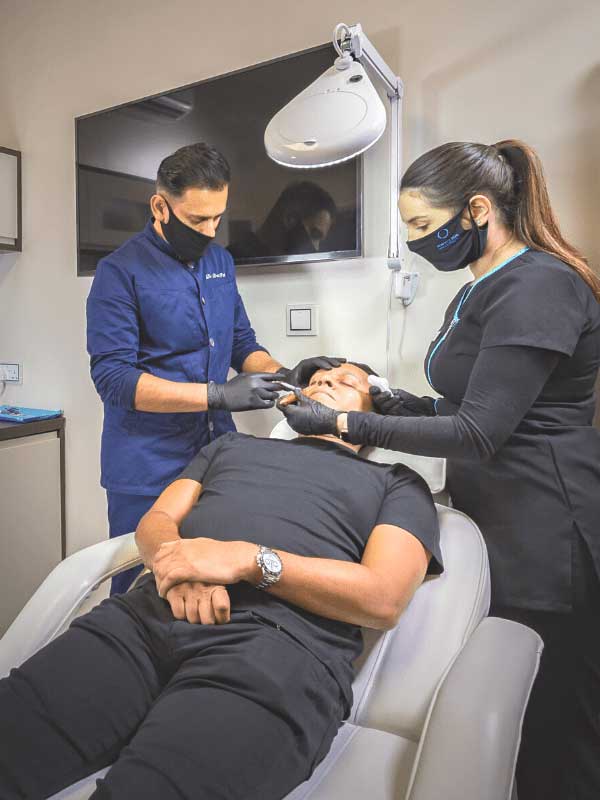

Why choose Perfect Skin Solutions for your Lumps, Bumps & Lesion Removal?
Our doctors have performed more than 2,000 procedures across private, NHS and military settings, providing extensive experience in the assessment and removal of suitable skin lesions. Treatment is selected according to the individual lesion and your clinical assessment, with patient safety and an appropriate cosmetic outcome prioritised throughout.
Where clinically required, removed tissue can also be sent for private histology laboratory testing.
Minor Surgery E-Consult