






























face Condition
Flat Brows
Flat brows describe eyebrows with a relatively straight shape or a less pronounced arch. This can be a natural facial feature and does not necessarily need treatment. A change in brow position, however, may make the upper eye area feel heavier or appear more hooded.
What causes flat or lowered brows?
Your natural brow shape is influenced by facial anatomy, including bone structure, soft-tissue support and muscle activity. Age-related changes can also cause the brows to sit lower over time.
A naturally straight brow is different from brow ptosis, which means descent of the eyebrow. The most appropriate advice depends on whether your concern is brow shape, position, asymmetry or loss of eyebrow hair.
Are lowered brows the same as hooded eyelids?
Lowered brows can contribute to hooding, but excess upper-eyelid skin and drooping of the eyelid itself are separate concerns. They may occur together and require different approaches.
An assessment should consider the forehead, brows and eyelids together. If drooping affects your vision, seek medical assessment before considering a cosmetic procedure.
At Perfect Skin Solutions in Southsea, Portsmouth, our doctors assess your brow position, facial movement and treatment goals before discussing suitable options and realistic expectations.
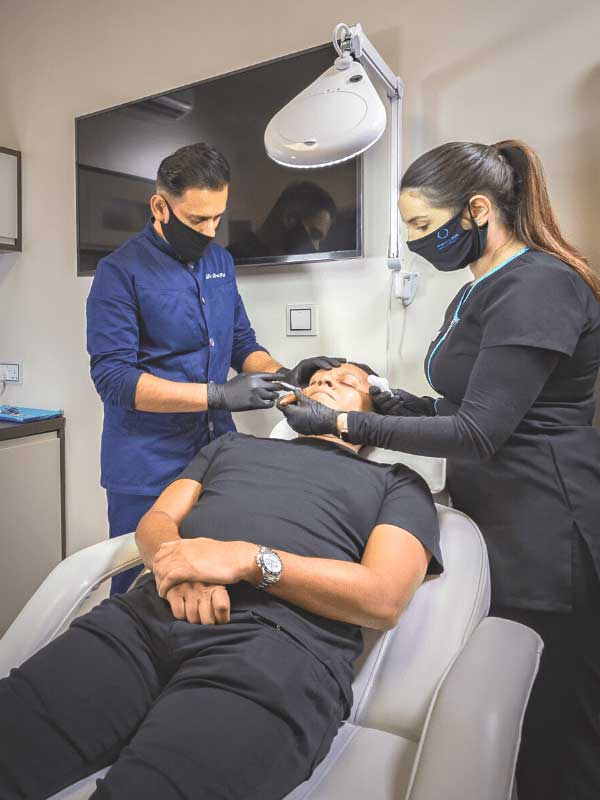
Why have your Flat Brows treated at Perfect Skin Solutions?
This is a complex issue with multiple factors at play, including fat and bone support. All of this must be considered to ensure the treatment plan is suitable for your face. Our doctors are experts in their field with delicate hands to assess and formulate a customised treatment plan and will also give you a realistic idea of what can be achieved.
Below are possible treatment options but a consultation is essential to assess the multiple anatomical factors in play, along with the pros and cons of each option.
Get in contact